Bulk material loading is one of the industry’s most persistent operational challenges. Traditional processes can require ten to fifteen minutes just to suit up with inadequate tie-offs, with OSHA compliance concerns at every step. OmniSafe transforms this workflow: gangways deploy smoothly, hatches open in any direction with our omnidirectional optimized cages, and integrated air and water reels remove residue before it accumulates. The result is faster loading and safer operations without unnecessary downtime. The rack you previously viewed as a risk integrates seamlessly, mitigates hazards, and increases throughput by 15–25%. Here, efficiency is not incidental—it is engineered into every aspect of the loading zone.
The industry continues to evolve, and we do as well—innovation is essential to staying ahead. While other systems allow hatches to move unpredictably, our cage offers full directional functionality without causing obstructions. When drivers force bars to create space, even a small misstep can lead to serious incidents. Our design locks securely into position, helping to reduce removal-related risks during operation.
Our specialists do not disappear after an initial engagement; we focus on building lasting trust. When you resolve an issue at one facility, results are noticed across other sites, and additional inquiries follow organically. We keep the process straightforward: share our name, and interested teams can contact us directly—no formal introductions required.
We continuously refine our approach based on your operational data and challenges, enabling us to develop practical, preventive strategies. If cement gangways are subject to frequent impact, for example, we plan for that reality by queuing additional units, shipping spares, and prioritizing uptime so trucks stay moving rather than waiting. Operations do not run themselves; together, we will help your corporate leaders see that yours appear to.
Sustainability is integrated into our design, transforming safety improvements into measurable environmental value. Our racks reduce dust and spills by 15–20%, consistent with The Sand Pile’s findings for frac operations, directly supporting your ESG metrics through lower Scope 1 emissions and zero-incident audits. On the cement side, Farmonaut’s 2025 data indicates a 25% reduction in idling due to optimized gangways, along with a Permian-region ESG score increase of 10% driven by compliant loading practices. The result is leak-free, low-waste operations that deliver cleaner performance investors recognize and value.
Boost Output by Up to
30
%
Source: Farmonaut's Concrete Mining: 2025 Innovations for Sustainability.
ESG Scores lifted
10
%
Source: CRH's Perspectives on Sustainable Building Materials, targeting 20-25% CO2/waste reductions in cement by 2030; cross-referenced with Permian case in Frac Sand Conference 2025
Avoid OSHA fines per violation up to
$
16550
ea
Source: OSHA's 2025 Annual Adjustments to Civil Penalties memo, capping serious violations at $16,550; paired with their July 2025 guidelines for 15% reductions via immediate hazard fixes like fall protection.
Hopper Car Loading
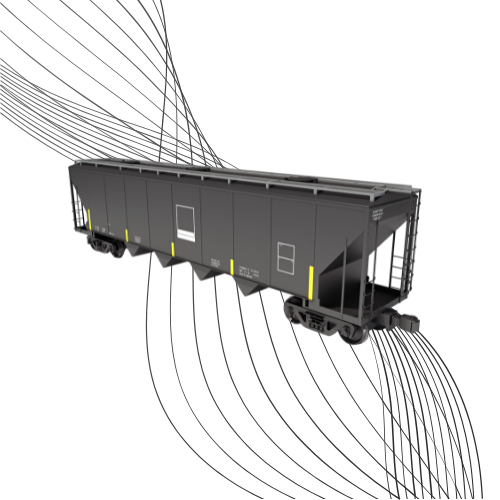
Loading and accessing hopper cars presents a unique set of industrial challenges. Unlike standard railcars, the configuration of covered hoppers—with their multiple hatches, narrow troughs, and varied heights—creates a "perfect storm" for OSHA compliance risks and operational bottlenecks.
The Multi-Hatch Maneuver: Operators often have to transit the entire length of a hopper car to open and close multiple round or trough hatches. Traditional fixed platforms leave them exposed to falls during this "middle-ground" transit.
Geometric Incompatibility: The narrow walking surface and curved roof of a hopper car make stable footing nearly impossible, especially when compounded by wind exposure or dust accumulation from materials like grain, cement, or frac sand.
The "Gap" Hazard: Misaligned hatches lead to improvised (and unsafe) reaching. Our tracking gangways and elevating safety cages are designed to move with the car, ensuring a flush, zero-gap connection every time.
Compliance & Liability: With OSHA 1910.28 requiring fall protection at 4 feet, an unprotected hopper car (typically 13–15 feet high) is a walking citation. We mitigate the risk of escalating fines by making compliance "passive"—built into the workflow, not an extra step for the operator.
Integrated Solutions, Ground-Level Efficiency
Our objective is to transform the top of a hopper car into a workspace that feels as secure as the facility floor. By integrating tracking handrail systems and telescoping gangways, we eliminate the "stop-and-start" of manual spotting.
Dry Bulk & Pneumatic Trailers
Safety and Efficiency for Every Hatch
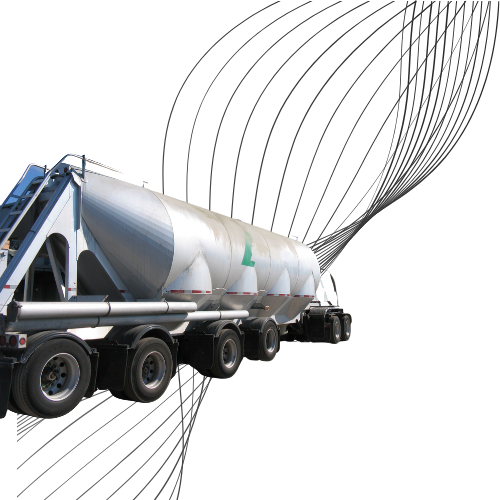
Dry bulk and pneumatic loading present some of the most complex OSHA compliance risks in your facility. From the slick, rounded tops of pneumatic trailers to the irregular hatch spacing of dry bulk trucks, your operators are constantly battling elevated work surfaces, wind exposure, and unstable footing.
Loading operations are further complicated by:
The "Vessel Gap": Standard platforms often leave dangerous gaps due to the curved profile of pneumatic tanks.
Misaligned Positioning: The time wasted spotting a truck perfectly under a spout is a direct hit to your daily throughput.
Environmental Hazards: Rain and wind turn the top of a bulk trailer into a high-risk slip zone, leading to potential health impacts and escalating fines.
Our objective is not simply to provide equipment, but to develop integrated solutions with you. We specialize in self-adjusting gangways and tracking enclosures that contour to the specific shape of your trailers, ensuring that every top hatch functions as safely and efficiently as ground level.
Safe, efficient, compliant. Let’s address it together.
Discuss Solutions.
Get in contact with an expert who can assist you with possible solutions or develop on your current project.